BOSCHMA Stakeholders’ Meeting with the National Labour Congress on Formal Sector Scheme
14 September, 2025
BOSCHMA Stakeholders’ Meeting with the National Labour Congress on Formal Sector Scheme
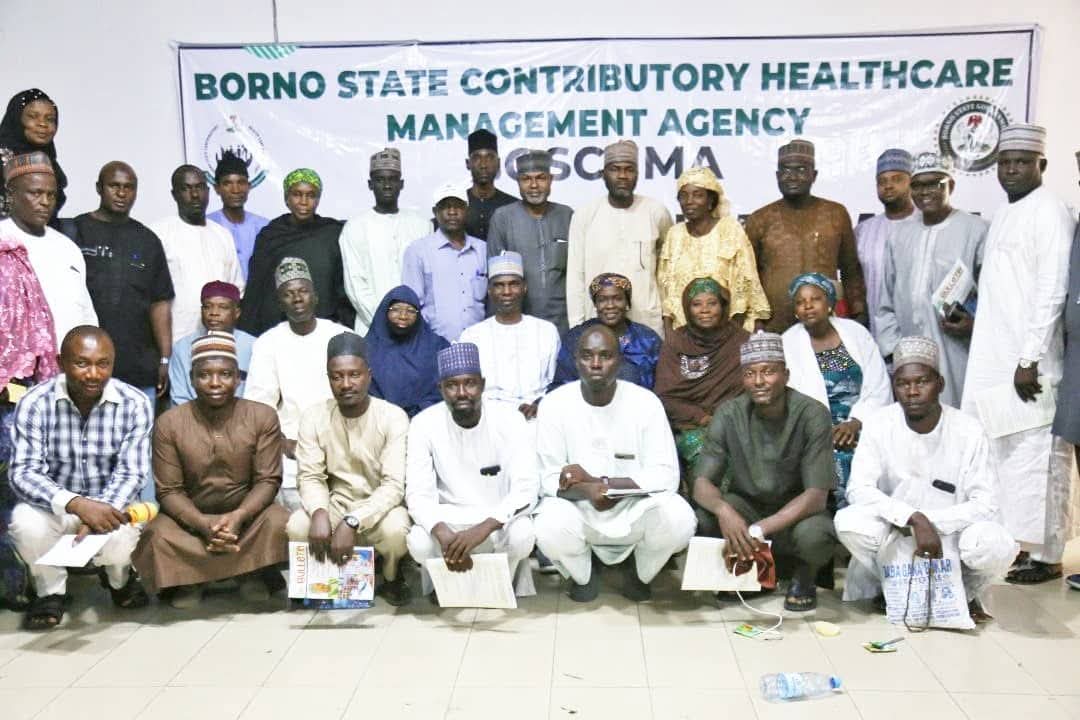
The Borno State Contributory Healthcare Management Agency (BOSCHMA) convened a strategic stakeholders’ meeting with the National Labour Congress (NLC) to sensitize and engage key actors on the rollout of the Formal Sector Health Insurance Scheme. The event took place at the Pinnacle Hotel, Maiduguri.
The meeting opened with remarks by Dr. Mohammed Ghuluze, Head of Service, who underscored the significance of health insurance in enhancing the welfare and productivity of civil servants. Goodwill messages were delivered by notable figures, including representatives of the Commissioner of Health, the Chairperson of BOSCHMA’s Board, and Dr. Mohammed Shettima, Permanent Secretary of the State Ministry of Health, as well as Dr. Shehu Sule, Chair of the Board of Trustees at the Network for Health Equity and Development.
Development partners also voiced their support, including the State Coordinator of the National Health Insurance Authority (NHIA), the NLC Chairman, and the LAFIYA UK Lead, all commending the initiative's potential to expand access to quality healthcare.
Dr. Saleh Abba Kaza, Executive Secretary of BOSCHMA, gave a detailed overview of the scheme, noting that 3.5% of each civil servant’s basic salary will be deducted each month. Meanwhile, the Borno State Government will contribute an additional 6.5%, making a total of 10% per enrollee. Coverage includes the primary enrollee, one spouse, and four biological children.
Dr. Inna Alimi, Director of Standards and Quality Assurance at BOSCHMA, delivered a technical presentation on the Basic Minimum Package of Health Services (BMPHS) available under the scheme, reiterating the agency’s commitment to quality and accessible services at accredited health facilities.
The meeting concluded with an interactive session, where participants asked questions and shared recommendations for effective implementation. The engagement deepened understanding and fostered transparency, trust, and shared ownership of the scheme among labour stakeholders and development partners.